A family of five does not need a dryer that treats one shirt beautifully. It needs one that clears the basket before the next load lands on top of it. Heat-pump dryers can do that, but only if the household is organized around their rhythm. They dry cooler and slower than a vented machine, and a 4.4 cu. ft. drum holds roughly a day of laundry for four or five people, not three days of it.
The six machines here are all ventless, all compact by American standards, and all within about half a cubic foot of one another. What separates them is duller than the marketing: how the condensate leaves the cabinet, whether the power cord is in the box, how much fabric the drum is rated to hold, and how long a cotton cycle really runs. A dryer that stops mid-cycle because the tank filled has stopped being useful to anybody.
We compared specifications, features and owner reports. Capacity and dimension numbers come from the manufacturers; the practical notes come from owners. Where a machine is a poor fit for a large family, we say so plainly, because a household of five is the wrong place to discover that four cubic feet is smaller than it sounds.
Top picks at a glance
Midea Heat Pump Ventless Front Load Dryer Stackable 4.4 Cu.ft White
Check price on AmazonBLACK+DECKER 4.4 Cu. Ft. Electric Dryer with Heat Pump, 22 lb. Capacity , 240V
Check price on AmazonTechomey 4.4 Cu.Ft Ventless Heat Pump Clothes Dryer, 24" Compact 120/240V Elec
Check price on AmazonCompare the shortlist
| Model | Type | Capacity | Key feature | Amazon |
|---|---|---|---|---|
| 1. Midea Heat Pump Ventless Front Load Dryer Stackable 4.4 Cu.ft Wh | Heat pump | 4.4 cu ft | Sensor drying | Check price |
| 2. BLACK+DECKER 4.4 Cu. Ft. Electric Dryer with Heat Pump, 22 lb. C | Heat pump | 4.4 cu ft | Ventless | Check price |
| 3. Techomey 4.4 Cu.Ft Ventless Heat Pump Clothes Dryer, 24" Compact | Heat pump | 4.4 cu ft | Sensor drying | Check price |
| 4. Smad 23.4" Ventless Heat Pump Dryer, 4.4 Cu.Ft Front Load Clothe | Heat pump | 4.4 cu ft | Sanitize cycle | Check price |
| 5. Samsung 4.0 cu. ft. Compact Ventless Heat Pump Dryer with AI Sma | Heat pump | 4.0 cu ft | Sensor drying | Check price |
| 6. Summit 3.88 cu.ft. Heat Pump Dryer, ENERGY STAR Certified, 208-2 | Heat pump | 3.88 cu ft | Delay start | Check price |
Detailed reviews
Midea Heat Pump Ventless Front Load Dryer Stackable 4.4 Cu.ft White

Midea's 4.4 cu. ft. ventless heat pump is the plainest machine in this group and one of the most sensible. A humidity sensor trims the cycle as the load dries, Wrinkle Care tumbles the finished load in unheated air for about 90 minutes, and the cabinet measures 23.4 inches wide, 25.7 deep and 33.5 tall. It is ENERGY STAR qualified and stackable. The power cord is sold separately and the machine requires 240 volts.
What stands out
- 4.4 cu. ft. drum holds a full day of family laundry
- Ninety-minute Wrinkle Care tumble reduces creasing after drying
- ENERGY STAR qualified, with a humidity sensor fitted as standard
Watch out for
- Power cord is not included, so add it to the order
- No drain hose listed, so plan on emptying the tank
BLACK+DECKER 4.4 Cu. Ft. Electric Dryer with Heat Pump, 22 lb. Capacity , 240V Electric Clothes Dryer with 16

Black+Decker's BDFH44M leads this batch on capacity, with 4.4 cu. ft. and a 22-pound fabric rating. Sixteen cycles cover the usual family mix, and the drum is zinc-coated stainless steel. A water tank and a 51-inch drain hose both come in the box, which matters when the machine runs every day. The trade is installation: it requires professional hardwiring with a 3-wire or 4-wire UL-listed cord that is not supplied. The cabinet is 24.3 inches wide, 23.4 deep and 33.5 tall, and it weighs about 121 pounds.
What stands out
- Twenty-two pound capacity is the highest fabric rating here
- Fifty-one inch drain hose included, so the tank is optional
- Sixteen cycles and a stainless steel drum at this footprint
Watch out for
- Cord is not included and professional hardwiring is required
- At 121 pounds it takes two people to move and level
Techomey 4.4 Cu.Ft Ventless Heat Pump Clothes Dryer, 24" Compact 120/240V Electric Front Load Drying Machine,

Techomey calls this a 24-inch machine, while the spec table puts the cabinet at 25.6 inches wide, 23.5 deep and 33.5 tall. It holds 4.4 cu. ft., runs sixteen cycles and uses a sensor that pauses the program when the load reaches the chosen dryness. The brand caps drum air below 50 degrees Celsius and claims a 66.7 percent cut in power use. It arrives with a four-prong cable, so older three-prong outlets need an adapter, and the tank has to be emptied after each load.
What stands out
- Low temperature ceiling below 50 degrees suits wool and prints
- Sixteen cycles with a sensor that pauses at the set dryness
- 4.4 cu. ft. drum in a cabinet designed to stack
Watch out for
- Tank needs emptying after every load, or the program stops
- Four-prong cable needs an adapter on older three-prong outlets
Smad 23.4" Ventless Heat Pump Dryer, 4.4 Cu.Ft Front Load Clothes Dryer with Wrinkle Care,10KG Load, 120/240V,

Smad's 4.4 cu. ft. ventless heat pump measures 23.4 inches wide, 25.7 deep and 33.5 tall, with a ten-kilogram load rating and sixteen programs. Wrinkle care and a sanitize cycle are the features that stand out, backed by an LED display and status lights that show where the program has reached. The listing describes 120/240V operation without saying which configuration ships, so confirm the voltage in writing before you buy. It stacks on a matching washer.
What stands out
- Sanitize and wrinkle care cycles in a narrow 23.4-inch cabinet
- LED display and status lights are easy to read across a room
- Stackable design with sixteen programs and a ten-kilogram rating
Watch out for
- Listing does not state which voltage version actually ships
- No drain hose mentioned, so budget time for the tank
Samsung 4.0 cu. ft. Compact Ventless Heat Pump Dryer with AI Smart Dial, Wi-Fi Connected, Smart Dry Technology
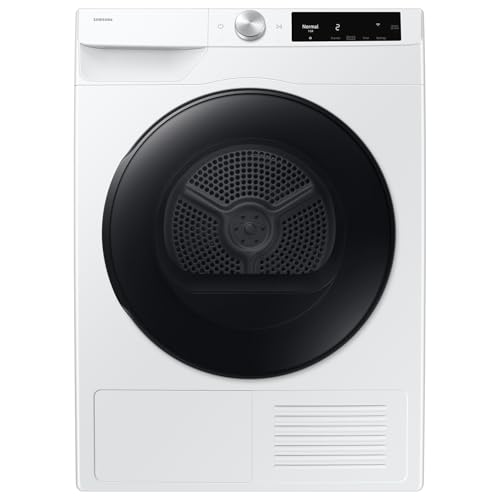
Samsung's 4.0 cu. ft. compact ventless heat pump is the connected one: an AI Smart Dial that reorders cycles around your habits, SmartThings Wi-Fi for end-of-cycle alerts and remote start, and sensor-based Smart Dry. It is ENERGY STAR certified. The listing gives a weight of 110.2 pounds but no cabinet dimensions, which is a real gap when you are fitting a closet. The drum is the second smallest here, and the phone alerts are genuinely useful when a load finishes after bedtime.
What stands out
- End-of-cycle phone alerts suit loads that run overnight
- AI Smart Dial puts your favorite cycles within one turn
- ENERGY STAR certified with sensor-based Smart Dry control
Watch out for
- Cabinet dimensions are missing from the product listing
- At 4.0 cu. ft. the drum is tight for family bedding
Summit 3.88 cu.ft. Heat Pump Dryer, ENERGY STAR Certified, 208-240V, Slim 24” Width, White

Summit's SLD242W has the smallest drum here at 3.88 cu. ft., rated for 17.6 pounds, in a cabinet 23.63 inches wide, 25.75 deep and 33 inches tall. Fourteen settings cover extra dry, iron dry, delicates, wool, air fluff and a half load, and the ECOEYE display reports power use while the cycle runs. A three-prong cord comes pre-installed for 208-240V, 15-amp service. The pull-out condensation tank wants emptying about every two cycles.
What stands out
- Three-prong cord comes pre-installed for the 208-240V service
- Fourteen settings including wool, air fluff and a half load
- ECOEYE display shows power draw while the cycle runs
Watch out for
- 3.88 cu. ft. is the smallest drum in this comparison
- Tank needs emptying roughly every two cycles of laundry
Buying guide
Start With Arithmetic, Not Cubic Feet
A household of five generates about one load a day once towels, gym kit, school uniforms and bedding are counted. A heat-pump cotton cycle runs 70 to 90 minutes, and heavy items can take two hours. That is workable if the machine starts after breakfast and nobody is waiting on it. It falls apart when three people need something dry by seven in the morning and the second load only began at eleven the night before. Before you shop, write down your real weekly load count and the hours when the machine can run. Then compare that with cycle times rather than with the drum size printed on the label. A dryer that runs from morning to night is a dryer the whole household ends up organizing itself around, and that is a real cost.
Drum ratings here run from 3.88 cu. ft. in the Summit to 4.4 cu. ft. in the Midea, Black+Decker, Techomey and Smad. Black+Decker also quotes 22 pounds of fabric, while Summit quotes 17.6 pounds in a smaller drum. Cubic feet and pounds are different scales, and neither figure tells you how a load of wet jeans will behave. The practical limit is air space. A heat pump moves a small volume of warm air through the drum, so a crammed load dries unevenly no matter how long you leave it. Two sensible loads usually finish in less total time than one overloaded one, and they leave the clothes in better shape. Buy for your biggest regular load, not the biggest load you have ever dried.
Where the Water Goes Decides How Often You Stop
A ventless dryer pulls moisture out of the clothes and condenses it, which means every load produces water you have to deal with. It goes into a pull-out tank or down a hose to a standpipe, laundry sink or floor drain. In a family running a load a day, that distinction matters more than any cycle count. The Summit tank wants emptying roughly every two cycles. Techomey tells owners to empty it after every load and pauses the program if they forget. Black+Decker ships a 51-inch drain hose with the machine, so the tank becomes a backup rather than a daily chore. If nobody in the house wants to carry a tank twice a day, pay attention to this paragraph more than to the cycle list.
If you have a standpipe within reach, use it. A drain hose has to fall continuously from the outlet to the waste connection; a hose that loops upward or sags into a trap will hold water and eventually smell. Secure it to the standpipe with a clip so it cannot jump out when the pump runs. In a rental with no plumbing access, the tank is the honest answer, and the useful habit is emptying it into a utility sink at the end of the day rather than letting it fill mid-load. Keep a shallow bowl under the tank cradle for the drips that come with a full pull-out. A laundry sink is the easiest connection of all, provided the hose can reach it without a rise.
Lint and the Condenser Are the Real Maintenance
Family volume exposes maintenance faster than any other variable. A heat-pump dryer has at least two places where lint collects: the filter in the door opening and the condenser or heat exchanger behind a panel. The door filter needs cleaning every load, sometimes twice with towels, because a matted filter starves the drum of air. The condenser needs a rinse or a vacuum at the interval in the manual, and more often in a house where five people generate lint from bedding, sportswear and socks. A clogged exchanger lengthens every cycle, and a lengthening cycle is the clearest early warning that the machine needs attention. Keep a spare filter if your model sells one, so a wet filter never becomes an excuse to run a damp load.
Treat a sudden jump in drying time as a maintenance signal rather than a failing appliance. Owners usually find a mat of lint on the exchanger, a filter that has been rinsed but not dried, or a drum sensor coated with fabric-softener residue. Wash the filter under running water and let it dry completely before refitting, because a damp filter restricts airflow. Wipe the sensor bars inside the drum with a soft cloth if the machine starts stopping early. None of this is difficult; it is simply more frequent in a large household, and the machines that stay reliable are the ones whose owners keep to the schedule. Write the cleaning dates on a card inside the door, because the interval slips easily.
Wiring, Cords and the Laundry Room You Have
Every machine here is a 240-volt appliance in one form or another, and the installation details differ enough to catch people out. Midea sells the power cord separately. Black+Decker requires professional hardwiring with a 3-wire or 4-wire UL-listed strain relief cord that does not come in the box. Techomey arrives with a four-prong cable, so a three-prong outlet needs an adapter. Summit ships with a three-prong cord already fitted for 208-240V, 15-amp service. Check the receptacle and the breaker before delivery day, and get an electrician's opinion if the laundry area only has a 120-volt outlet. A 120-volt circuit cannot feed a 240-volt compressor, and no adapter sold in a hardware store changes that. Get the answer in writing before you order anything.
Fit is the other half of installation. The cabinets run 23.4 to 25.7 inches wide and 23.4 to 25.75 inches deep, with heights between 33 and 33.5 inches. Add two or three inches behind the machine for the hose and plug, and check the door swing against the nearest wall or shelf. Samsung publishes a weight of 110.2 pounds for its 4.0 cu. ft. model but no cabinet dimensions, which is a real gap if the closet is tight. Stacked pairs also need a stacking kit matched to the washer, and only a front-loader with a flat, load-bearing top can carry a dryer. Measure the delivery path as well, including the turn at the foot of the stairs and the width of the closet door.
Running Cost, Gentleness and the Honest Tradeoff
Heat pumps move heat rather than generating it with a resistive element, which is why the manufacturers can claim savings: Midea and Black+Decker both cite at least 28 percent less electricity than a standard dryer, and Techomey claims a 66.7 percent reduction. Treat those as manufacturer claims rather than audited results, and remember that longer cycles eat into the advantage. The direction still holds. Samsung and Summit carry ENERGY STAR certification, and Midea is ENERGY STAR qualified. In a house that dries a load a day, efficiency stops being a footnote and becomes the reason to buy the machine in the first place. Rebates for efficient appliances sometimes exist, and the ENERGY STAR listing is the document you need to claim one.
The gentler heat is a genuine benefit with children's clothes, stretch fabrics and school prints that fade in a hot drum. The cost is time, and a large family feels that cost more than a couple does. The honest conclusion is that a compact heat pump works well as the only dryer for a household that runs one load a day and can leave it running, and struggles as the only dryer for five people in a damp climate with a mountain of towels. If you already have a vented hookup and the floor space, a full-size vented machine may serve the family better. That is a mismatch of scale rather than a failure of the technology. Both answers can be right in different houses.
Frequently asked questions
Can a 4.4 cu. ft. heat-pump dryer keep up with a family of five?
It can if the household runs roughly one load a day and does not need everything back within the hour. Expect 70 to 90 minutes for cottons and longer for towels. Most families this size still take comforters to a laundromat, because a compact drum cannot give a king-size quilt room to tumble.
Do I have to empty the water tank after every load?
It depends on the model. Summit suggests emptying every two cycles, while Techomey tells owners to empty after each load and pauses the program if the tank fills. A drain hose removes the job entirely. Black+Decker includes a 51-inch hose, and most ventless dryers accept one if a standpipe or sink is within reach.
Will a heat-pump dryer lower my electric bill?
Usually, per load, because it moves heat instead of making it. Manufacturers here claim reductions between 28 and 66.7 percent compared with standard dryers, though longer cycles reduce the gap. Your rates, your load count and how well your washer spins determine the real number. A high-spin wash cycle saves more drying energy than any setting on the dryer.
Can I stack one of these on my existing washer?
Only on a front-load washer with a flat, load-bearing top, using a stacking kit sized to that washer. A top-loader cannot carry a dryer, whatever the lid is rated for. Check the combined height against the closet opening and confirm that the dryer door still opens fully once the pair is in place.
Why does a heat-pump load take so long?
The drum runs cooler, closer to a warm room than a hot oven, and the air is recirculated through a condenser instead of being exhausted. Moisture leaves slowly, and a compact drum holds less air. That is the trade for lower running costs and gentler fabric care. Sensor drying trims wasted time but cannot beat the physics.
Verdict
For a household that runs a load a day, the Black+Decker BDFH44M is the most practical machine here. It carries the highest fabric rating in the group at 22 pounds, offers sixteen cycles, and includes a 51-inch drain hose, so the tank stops being a daily interruption. The catch is installation: it needs professional hardwiring and the cord is not supplied.
The Midea is the value pick, with a 4.4 cu. ft. drum, a humidity sensor and a ninety-minute Wrinkle Care tumble provided you buy the cord. Step up to the Samsung if you want end-of-cycle alerts on your phone and an AI dial that keeps favorite cycles close, but measure the opening first because Samsung does not publish the cabinet dimensions.