The duct is the part nobody prices into a dryer. It hides behind the machine, runs through a wall or a floor, and quietly decides whether the appliance can go where you want it. A vented dryer needs that path to the outside. A heat pump does not, which is why the same laundry closet that has held a vented machine for twenty years may be the easiest place in the house to put one and the hardest place to put another.
What you give up is speed, and a little floor space in the form of a bigger cabinet. A vented dryer pushes 5,000-watt heat through a drum and finishes a load in 40 minutes. A heat pump warms air to a much lower temperature and takes 70 to 90 minutes for the same cottons. It also produces water that has to go into a tank you carry or a hose you plumb.
We compared specifications, features and owner reports for six compact heat-pump dryers, then lined the category up against the vented machines most US homes already have. The useful comparison is not which technology is newer. It is which one fits your room, your wiring and your patience.
Top picks at a glance
Midea Heat Pump Ventless Front Load Dryer Stackable 4.4 Cu.ft White
Check price on AmazonBLACK+DECKER 4.4 Cu. Ft. Electric Dryer with Heat Pump, 22 lb. Capacity , 240V
Check price on AmazonSamsung 4.0 cu. ft. Compact Ventless Heat Pump Dryer with AI Smart Dial, Wi-Fi
Check price on AmazonCompare the shortlist
| Model | Type | Capacity | Key feature | Amazon |
|---|---|---|---|---|
| 1. Midea Heat Pump Ventless Front Load Dryer Stackable 4.4 Cu.ft Wh | Heat pump | 4.4 cu ft | Sensor drying | Check price |
| 2. BLACK+DECKER 4.4 Cu. Ft. Electric Dryer with Heat Pump, 22 lb. C | Heat pump | 4.4 cu ft | Ventless | Check price |
| 3. Samsung 4.0 cu. ft. Compact Ventless Heat Pump Dryer with AI Sma | Heat pump | 4.0 cu ft | Sensor drying | Check price |
| 4. Techomey 4.4 Cu.Ft Ventless Heat Pump Clothes Dryer, 24" Compact | Heat pump | 4.4 cu ft | Sensor drying | Check price |
| 5. Summit 3.88 cu.ft. Heat Pump Dryer, ENERGY STAR Certified, 208-2 | Heat pump | 3.88 cu ft | Delay start | Check price |
| 6. Smad 23.4" Ventless Heat Pump Dryer, 4.4 Cu.Ft Front Load Clothe | Heat pump | 4.4 cu ft | Sanitize cycle | Check price |
Detailed reviews
Midea Heat Pump Ventless Front Load Dryer Stackable 4.4 Cu.ft White

Midea's 24-inch ventless heat pump holds 4.4 cu. ft. and stacks over a matching washer. It needs a 240-volt circuit, and the cord is sold separately, so factor that in before installation day. A humidity sensor sets cycle length from the load rather than a timer, and Wrinkle Care adds about 90 minutes of unheated tumbling at the end. The cabinet is 23.4 inches wide, 25.7 inches deep and 33.5 inches tall, which fits a standard closet slot.
What stands out
- Full 4.4 cubic feet in a 23.4-inch-wide cabinet
- Humidity sensor ends cycles on dryness, not time
- ENERGY STAR qualified with a long wrinkle cycle
Watch out for
- Power cord is sold separately from the dryer
- The 90-minute wrinkle cycle adds extra running time
BLACK+DECKER 4.4 Cu. Ft. Electric Dryer with Heat Pump, 22 lb. Capacity , 240V Electric Clothes Dryer with 16

Black+Decker's 4.4 cu. ft. heat-pump dryer is the one to pick if you plan to plumb the drain: a 51-inch hose comes in the box alongside the water tank. It carries a 22-pound fabric rating and 16 cycles, with a zinc-coated stainless drum that resists rust in a damp basement. The maker claims 28 percent lower electricity use than a standard dryer. The catch is installation, which requires professional hardwiring with a UL-listed cord that is not supplied.
What stands out
- Drain hose included, so the tank becomes optional
- A 22-pound fabric rating and 16 cycle choices
- Zinc-coated stainless drum resists rust in damp rooms
Watch out for
- Professional hardwiring required, and no cord is included
- About 121 pounds, so plan a two-person move
Samsung 4.0 cu. ft. Compact Ventless Heat Pump Dryer with AI Smart Dial, Wi-Fi Connected, Smart Dry Technology
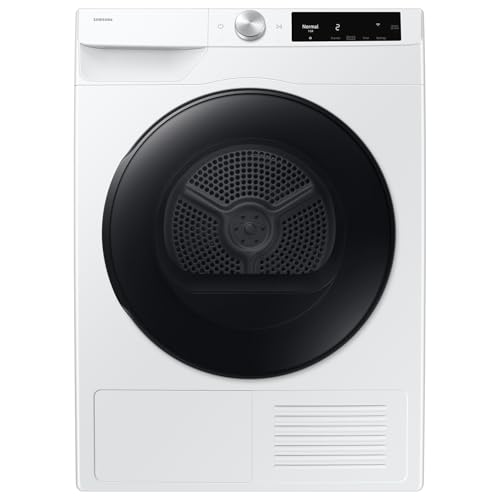
Samsung's 4.0 cu. ft. compact heat pump is the most connected machine in the group, with an AI Smart Dial, SmartThings Wi-Fi and Sensor Dry. The dial reorders itself around the cycles you actually use, and the app sends end-of-cycle alerts and supports remote start or delay. It is ENERGY STAR certified and weighs 110 pounds. The listing gives no cabinet dimensions, which is inconvenient when the whole purchase hinges on fitting a 24-inch opening.
What stands out
- The AI dial surfaces your regular cycles first
- Wi-Fi alerts, remote start and delay controls included
- ENERGY STAR certified, with sensor-based drying built in
Watch out for
- No cabinet dimensions appear in the product listing
- Smallest drum in the group at four cubic feet
Techomey 4.4 Cu.Ft Ventless Heat Pump Clothes Dryer, 24" Compact 120/240V Electric Front Load Drying Machine,

Techomey's 24-inch ventless heat pump comes with a four-prong power cable, which makes it the least fussy of the group for a standard four-wire dryer outlet. The 4.4 cu. ft. drum runs 16 cycles with sensor drying, and the maker says air stays below 50 degrees Celsius to protect wool and high-grade synthetics. The tank has to be emptied after every load, and the program pauses until you do it, so this one rewards a routine rather than good intentions.
What stands out
- A four-prong power cord is included with the machine
- Low drying temperature protects wool and fine synthetics
- Offers 16 drying cycles with automatic sensor control
Watch out for
- Condensate tank has to be emptied after each load
- A three-prong outlet requires a separate conversion adapter
Summit 3.88 cu.ft. Heat Pump Dryer, ENERGY STAR Certified, 208-240V, Slim 24” Width, White

Summit's SLD242W is a slim 24-inch heat pump with a 3.88 cu. ft. stainless drum rated for 17.6 pounds of fabric. Fourteen settings cover extra dry, iron dry, delicates, wool, air fluff, half load and anti-crease, and the ECOEYE display reports power consumption during the cycle. A three-prong cord is pre-installed for 208-240V, 15-amp service, which is rare in this category. The pull-out condensation tank wants emptying roughly every two cycles.
What stands out
- A three-prong cord comes pre-installed for 208-240V service
- Fourteen settings including half load and air fluff
- ECOEYE shows power use as the cycle runs
Watch out for
- At 3.88 cubic feet, the smallest drum in this group
- Condensate tank needs emptying after about two cycles
Smad 23.4" Ventless Heat Pump Dryer, 4.4 Cu.Ft Front Load Clothes Dryer with Wrinkle Care,10KG Load, 120/240V,

Smad's 4.4 cu. ft. ventless heat pump covers the basics plus wrinkle care and a sanitize cycle, with 16 programs on an LED display and a stackable cabinet that fits a 23.4-inch width. It is listed as 120/240V, but the listing does not say which configuration ships, so confirm that with the seller before wiring anything. The dimension fields also disagree between the bullet points and the specification block, so measure your opening rather than trusting the number on the page.
What stands out
- Sanitize and wrinkle care on a 16-program panel
- 4.4 cubic feet in a narrow 23.4-inch cabinet
- A stackable design with clear LED status lights
Watch out for
- Voltage configuration is not stated in the listing
- Published dimensions conflict inside the same listing page
Buying guide
Two Ways to Get Water Out of a Drum
A vented dryer is a heater with a fan. It draws room air in, warms it with a resistance element, tumbles clothes through the hot stream and pushes the damp exhaust out through a duct. Simple, fast, and indifferent to where the heat ends up. A heat pump does the same job with a refrigeration circuit instead of an element: the air stays inside a sealed loop, a cold coil condenses the moisture out, and the dried, warmed air returns to the drum. The water leaves as liquid, not vapor, which is why the machine needs a tank or a drain rather than a hole in the wall.
That difference changes where the water goes. Vented machines dump it outdoors as vapor, along with a good deal of the heat you paid for. Heat pumps collect it as liquid in a tank or drain it away, and because the air is recirculated they use far less electricity to reach a drying temperature. The compressor and fans still draw power, but they move heat rather than create it. Midea and Black+Decker both cite at least 28 percent less energy than a standard dryer. It is a manufacturer claim, but the direction is right, and ENERGY STAR lists all the machines here. The trade is a longer cycle, a heavier cabinet and a higher purchase price.
Install Cost Decides More Than the Label
A vented dryer install is cheap only when the duct already exists and is short. Flexible foil run through a crawlspace, two elbows and a roof cap can add up to more than the appliance, and most manuals put an equivalent-length cap around 25 feet, counting each elbow as several. Long runs collect lint, reduce airflow and turn a 45-minute cycle into 70. If you rent, the landlord may forbid a new wall penetration altogether, which ends the conversation before efficiency enters it. If you own, get a quote for a clean four-inch run through an exterior wall before you shop, so the comparison includes the wall.
Ventless installation trades the duct for plumbing and wiring. You need somewhere for condensate to go, ideally a standpipe or floor drain within hose reach, and you need the right circuit. Midea sells its cord separately. Black+Decker requires professional hardwiring with a UL-listed cord that is not included. Summit ships with a pre-installed three-prong cord for 208-240V, 15-amp service, the friendliest arrangement in this group. Add the electrician to the budget before you decide the heat pump is the cheaper install, and check whether the panel has capacity alongside everything else in the house.
Cycle Time and Honest Load Sizes
Speed is where vented dryers still win outright. A typical full-size vented machine dries a mixed load in 40 to 50 minutes and a comforter in about an hour. A compact heat pump needs 70 to 90 minutes for cottons, longer for towels, and it cannot take the comforter at all. If laundry has to be done in one evening for a family of five, that gap matters more than any efficiency figure on the box. Plan around it: one load a day is comfortable, three loads on a Sunday is an afternoon of waiting, and the machine does not care which you prefer.
Capacity compounds it. Drums here run from 3.88 to 4.4 cu. ft., against 7.0 to 7.4 for a standard vented dryer. Fabric ratings sound generous, 22 pounds for Black+Decker and 17.6 for Summit, but they describe what the drum can hold, not what will dry evenly. A packed heat-pump drum leaves the middle damp and the sensor guessing. Plan on more, smaller loads, and keep bedding for a laundromat or a friend's full-size machine. Two people adapt quickly. Four people with towels and sports kit will feel the drum size every week.
Reading the Energy Numbers Without Fooling Yourself
Efficiency claims compare electricity used per pound of laundry dried, not the number of loads you run. A heat pump that needs three cycles where a vented machine needs two eats into its own advantage, which is why overloading is the quiet enemy of the whole category. The other half of the equation is your house. In winter, a vented dryer pulls heated indoor air and throws it outside, so the furnace replaces it. In summer, a heat pump releases a little warmth into the room, which a basement likes and a closet does not. Neither effect shows up on the dryer's label.
There is no honest way to promise a payback period without knowing your electricity rate, your gas rate if you heat with gas, and how many loads a week you run. Do the arithmetic with your own bill if the number matters. A dryer that runs 250 cycles a year at 90 minutes is a different proposition from one that runs 80. What can be said plainly: the machines here are ENERGY STAR listed, they dry at low temperatures that are gentler on elastic and wool, and they cost more to buy than a basic vented dryer. Whether the difference returns depends on how long you keep it.
Maintenance: Two Filters and a Coil
Every dryer needs its lint filter cleared, but a heat pump asks for more. There is usually a second filter or a condenser grille behind the lower panel, and the coil behind it collects a felt of lint that no filter catches. Clean the primary filter every load, rinse the secondary one monthly, and vacuum the coil every few months. A clogged coil makes the compressor work harder and pushes cycle times up, which owners often blame on the technology rather than the maintenance. The job takes ten minutes and saves hours of waiting over a winter.
The water side needs attention too. Summit says its tank wants emptying about every two cycles, Techomey says every load. Empty it into a sink, rinse the tank, and leave it to air dry rather than snapping it back damp. A vented dryer's equivalent chore is the duct: once a year, disconnect it, brush it out and check that the exterior damper still opens. Both jobs are simple. Both get skipped, and both show up later as long cycles and a smell that no amount of detergent fixes.
When a Vented Dryer Is Still the Right Buy
If you have a short, clean duct, a 240-volt circuit, a family that generates several loads a week and no interest in waiting 90 minutes for towels, a vented dryer remains the sensible choice. It is simpler, it dries faster, it handles king bedding, and a basic model costs less to buy. The same goes for a garage or mudroom on an exterior wall where the duct run is a straight two feet. In an unheated garage, a vented machine also sidesteps the cold-room slowdown that a heat pump suffers in January.
Heat pumps make the most sense where the duct cannot go: apartments, closets, basements with no exterior wall, cabins, and any building where cutting a four-inch hole is forbidden or expensive. They also suit households that run one load a day and do not mind starting it before dinner. Choose the technology for the room first, then pick the machine. The six here are all competent; the differences are depth, cord, tank and controls, and none of them will dry a king comforter in one pass.
Frequently asked questions
Do heat-pump dryers really take twice as long?
Roughly one and a half to two times as long for cottons. A vented machine finishes in about 40 to 50 minutes; a compact heat pump runs 70 to 90. Heavy towels and denim stretch further. Sensor drying stops the cycle at the right moment, but it cannot raise the drying temperature, so the extra time is built into the process.
Can I put a heat pump where my vented dryer was?
Usually yes, if the space is deep enough and the circuit matches. Heat pumps are deeper than vented cabinets and need clearance behind for the cord and hose. Check the voltage: some ship without a cord and some need hardwiring. The old duct can be capped and sealed, which also stops cold air leaking into the laundry room.
Does a ventless dryer make the laundry room damp?
It should not. Moisture condenses inside the machine and leaves as liquid in the tank or drain, not as steam in the room. A little warmth does escape, and a closet with no air movement will feel stuffy. If the walls bead up, the tank is likely overflowing or the condenser is clogged, and both are worth fixing promptly.
Is a heat pump worth it if electricity is cheap?
Less so. The lower running cost is the main financial argument, and cheap power shortens the payback. Buy one for the installation freedom first: no duct, no exterior wall, no make-up air. If the duct is short and the power is inexpensive, a vented dryer is the better value and the faster machine.
Will a heat pump dry a king comforter?
Not in the compact sizes listed here. A 4.0 to 4.4 cu. ft. drum cannot tumble a king comforter enough for even drying, and the sensor will keep running while the center stays damp. Use a laundromat or a full-size vented machine for bedding, and keep the compact dryer for everyday loads, towels and delicates.
Verdict
For most indoor installations, the Midea is the pick: 4.4 cu. ft. in a published 23.4-inch width, humidity-sensing cycles, ENERGY STAR qualification and a wrinkle cycle that earns its place. Remember the cord is extra. The Black+Decker is the value choice if you will hardwire it and use the included 51-inch drain hose, since permanent drainage removes the daily tank ritual.
The Samsung is the upgrade for anyone who wants the AI dial and phone alerts, though you will need to ask for cabinet dimensions. If your duct is short, your family runs four loads a weekend, and bedding goes in the dryer, keep the vented machine: no heat pump here will match its speed or its drum.