In a cold climate, the dryer vent is the part of the laundry system that fails first. The outside hood freezes open or shut, lint holds moisture and turns to ice, and a long run through an unheated rim joist loses so much heat that the dryer never gets ahead of the load. Heat pump dryers sidestep the whole problem by not using outside air at all.
That is the real argument for one in Minnesota, Maine or upstate New York. A ventless dryer recirculates air through a sealed loop, condenses the moisture, and sends it to a drain or a tank. There is no duct to insulate, no flap to thaw, and no make-up air pulled through the house on the coldest day of the year.
What does not change is the room. A heat pump dryer still needs a circuit, a level floor and somewhere for the water to go. If the machine sits in an unheated garage or a three-season porch, check the manufacturer's operating range before you buy; low ambient temperatures can slow drying and, in some cases, stop the machine.
We looked at six compact heat pump dryers that are realistic candidates for cold-climate homes, weighing voltage, condensate handling, drum size and how they behave in a small, closed laundry room. Where the listing does not state a specification, we do not fill it in.
Top picks at a glance
Midea Heat Pump Ventless Front Load Dryer Stackable 4.4 Cu.ft White
Check price on AmazonSamsung 4.0 cu. ft. Compact Ventless Heat Pump Dryer with AI Smart Dial, Wi-Fi
Check price on AmazonBLACK+DECKER 4.4 Cu. Ft. Electric Dryer with Heat Pump, 22 lb. Capacity , 240V
Check price on AmazonCompare the shortlist
| Model | Type | Capacity | Key feature | Amazon |
|---|---|---|---|---|
| 1. Midea Heat Pump Ventless Front Load Dryer Stackable 4.4 Cu.ft Wh | Heat pump | 4.4 cu ft | Sensor drying | Check price |
| 2. Samsung 4.0 cu. ft. Compact Ventless Heat Pump Dryer with AI Sma | Heat pump | 4.0 cu ft | Sensor drying | Check price |
| 3. BLACK+DECKER 4.4 Cu. Ft. Electric Dryer with Heat Pump, 22 lb. C | Heat pump | 4.4 cu ft | Ventless | Check price |
| 4. Smad 23.4" Ventless Heat Pump Dryer, 4.4 Cu.Ft Front Load Clothe | Heat pump | 4.4 cu ft | Sanitize cycle | Check price |
| 5. Summit 3.88 cu.ft. Heat Pump Dryer, ENERGY STAR Certified, 208-2 | Heat pump | 3.88 cu ft | Delay start | Check price |
| 6. Techomey 4.4 Cu.Ft Ventless Heat Pump Clothes Dryer, 24" Compact | Heat pump | 4.4 cu ft | Sensor drying | Check price |
Detailed reviews
Midea Heat Pump Ventless Front Load Dryer Stackable 4.4 Cu.ft White

Midea's 4.4-cubic-foot heat pump dryer is the most balanced machine in this group: 240 volts, a 24-inch cabinet, a humidity sensor and ENERGY STAR qualification. The sensor is the feature that matters in a cold room, because it ends the cycle when the load is dry rather than running a timer that no longer matches the conditions. The cord is sold separately.
What stands out
- Humidity sensor adapts to slower drying in a cold room
- 24-inch cabinet fits a tight mudroom or closet
- ENERGY STAR qualified for lower energy use per load
Watch out for
- Power cord is sold separately, so add it to the order
- Needs a dedicated 240-volt circuit at the installation spot
Samsung 4.0 cu. ft. Compact Ventless Heat Pump Dryer with AI Smart Dial, Wi-Fi Connected, Smart Dry Technology
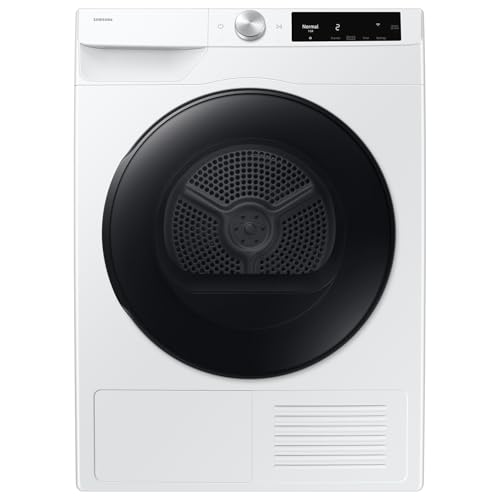
The only Wi-Fi machine here, and the smallest drum at 4.0 cubic feet. Samsung's app sends an end-of-cycle alert, which is genuinely useful when the laundry is in a cold corner of the house and you would rather not walk over to check. AI Smart Dial reorders the cycles you use most. The listing does not publish full cabinet dimensions, so confirm the fit.
What stands out
- App alerts save trips to a cold laundry room
- AI Smart Dial simplifies cycle selection by learning your habits
- Sensor Dry adjusts time and temperature as the load dries
Watch out for
- Full cabinet dimensions are not published, so measure first
- 4.0 cu. ft. is the smallest drum in the group
BLACK+DECKER 4.4 Cu. Ft. Electric Dryer with Heat Pump, 22 lb. Capacity , 240V Electric Clothes Dryer with 16

The largest drum here at 4.4 cubic feet, with a 22-pound capacity and a 51-inch drain hose in the box. In a cold climate, the hose matters: it keeps condensate indoors and out of a tank you would otherwise carry through the snow. The machine requires professional hardwiring, and the cord is not included, so plan that before delivery. It is also the heaviest, so plan the delivery route carefully.
What stands out
- Drain hose included for indoor condensate disposal all winter
- 22-pound capacity suits family loads and bulky bedding
- Stainless steel drum with a transparent door for checking loads
Watch out for
- Requires professional hardwiring, and the cord is not included
- Heaviest machine in the group at 121 pounds
Smad 23.4" Ventless Heat Pump Dryer, 4.4 Cu.Ft Front Load Clothes Dryer with Wrinkle Care,10KG Load, 120/240V,

Smad lists this 4.4-cubic-foot dryer for 120/240V operation, which is useful in an older cold-climate house where the laundry outlet is not what the brochure assumes. It has 16 programs, sanitize and wrinkle care, and a 23.4-inch width that stacks with a matching washer. On 120 volts, expect the cycle to run well past the usual time. The cabinet is compact enough for a mudroom corner.
What stands out
- 120/240V listing suits older house wiring and smaller panels
- 16 programs including sanitize and wrinkle care for everyday loads
- 23.4-inch width allows a compact stack in tight rooms
Watch out for
- 120-volt drying is slow, especially in a cold room
- Tank handling adds a chore if no drain is available
Summit 3.88 cu.ft. Heat Pump Dryer, ENERGY STAR Certified, 208-240V, Slim 24” Width, White

Summit's 3.88-cubic-foot dryer is the easiest to connect in this group, with a pre-installed three-prong cord for a 208-240V, 15-amp outlet. Fourteen settings cover wool, delicates, air fluff and a half load, and the ECOEYE display reports power use per cycle. The pull-out tank needs emptying about every two cycles, which is a real chore in a cold mudroom. Connecting it takes the least electrical work of the six.
What stands out
- Pre-installed cord suits a 15-amp, 208-240V dryer circuit
- Half-load and air fluff settings for small washes
- ECOEYE display shows power consumption for each cycle
Watch out for
- Tank needs emptying roughly every two drying cycles
- Smallest capacity in this group at 3.88 cubic feet
Techomey 4.4 Cu.Ft Ventless Heat Pump Clothes Dryer, 24" Compact 120/240V Electric Front Load Drying Machine,

A 4.4-cubic-foot, 24-inch ventless dryer listed for 120/240V and built to stack. It offers 16 cycles and sensor drying that pauses when the load reaches the chosen level, which helps in a cold room where fixed timers misjudge. Two caveats from the listing: empty the tank after each use, and the four-prong cable needs an adapter on a three-prong outlet.
What stands out
- 4.4 cu. ft. drum in a 24-inch cabinet
- Sensor drying across 16 cycles ends loads when dry
- 120/240V listing adds flexibility where wiring is limited
Watch out for
- Tank must be emptied after every load or the cycle pauses
- Four-prong cable may need an adapter on older outlets
Buying guide
Why Ventless Helps When the Temperature Drops
A vented dryer moves a surprising amount of air. Every cycle pulls air out of the house and pushes it through a duct that may run through an unheated attic, rim joist or garage. In freezing weather that air carries moisture, and the moisture condenses on the cold duct wall, where lint sticks to it and gradually closes the pipe. The problem compounds quietly until the dryer overheats or the outside flap stays shut. A flap that sticks open in summer lets hot humid air into the duct, where it can condense against the cooler metal and drip back into the laundry room. Homeowners usually blame the dryer; the duct is the culprit.
A heat pump dryer removes that entire path. The air inside the drum circulates through a sealed loop, passes over a cold coil that condenses the moisture, and returns to the drum warmed again. Nothing goes outside, so there is no duct to freeze and no flap to stick. The condensate goes to a tank or a hose, both of which stay indoors where the water remains liquid. The only water leaving the machine is the condensate, and it leaves at room temperature through a hose or a tank. Nothing in the system depends on the outdoor temperature, which is why the same dryer works in Miami and in Fargo.
The Room Still Sets the Pace
Ventless does not mean immune to weather. A heat pump moves heat from one place to another, and it needs a reasonable temperature difference to do that efficiently. In a 70-degree laundry room the machine behaves as designed. In a 40-degree garage it will run longer, and below the manufacturer's stated range it may not run at all. Check the manual, not the marketing copy. A garage that holds at 35 degrees all winter is a different installation from a basement that stays at 62, even though neither is heated by the house's main system. The number you want is the lowest overnight reading, not the daytime high.
This is where cold-climate buyers get tripped up. The dryer may be sold as suitable for garages, but the manual can specify a minimum ambient temperature that a Vermont January will not meet. If the machine lives in a conditioned part of the house, none of this applies. If it lives in a mudroom that you keep at 50 degrees, expect longer cycles and plan loads accordingly. If the room is borderline, a small space heater set to 50 degrees will keep the machine inside its range without heating the whole garage. That costs less than replacing a dryer that failed at 30 degrees, and it keeps the condensate from freezing.
Frozen Condensate Lines and Where the Water Goes
The one water line a heat pump dryer can have is the condensate drain, and in a cold house it is worth thinking through. A hose that runs to a standpipe or laundry sink indoors is safe. A hose that exits through a wall to a drywell or an outdoor drain is a freeze risk, and a blocked line will back water into the machine or onto the floor. Keep the discharge indoors if you can. A frozen hose does not always announce itself. Sometimes the machine simply stops draining, and the first sign is water on the floor after a thaw. Route the hose where you can see it.
If the only drain is outdoors, use the tank in winter and switch to the hose in spring. A tank also gives you a way to notice how much water the machine is producing, which is a useful early warning if something is off. Empty it after every load or two, depending on the model, and never let it sit full in a room that drops below freezing. Tank capacity differs across these models and is rarely stated in the listing, so the first few loads are a calibration exercise. Learn the limit before you run a load of bedding overnight. An overflow switch may pause the cycle, but it will not mop the floor.
Longer Cycles and Lower Peak Draw
Heat pump drying is slow by design. The drum air stays warm rather than hot, moisture is condensed out gradually, and a heavy load can take well over an hour. In a cold room it takes longer still. That is the trade for efficiency, and it is worth understanding before the first load of towels, because a machine that seems broken is often just working as intended. Manufacturers rarely publish cycle times because they depend on load size, spin speed and room temperature. Owner reports are more useful than the spec sheet here, and they consistently describe longer runs in cold rooms. Plan for a long afternoon rather than a quick hour.
The compensation is electrical. There is no large resistance element switching on and off, so the dryer draws a steadier, lower current across a longer cycle. In an older house with a marginal panel, that can matter. It also means the dryer adds less heat to the room than a vented machine, which is welcome in a tight laundry closet and less welcome in a cold basement. A heat pump dryer on a 240-volt circuit still uses a dryer receptacle and a dedicated breaker, so the electrical work is similar to any other electric dryer. The difference is how the power is used once the cycle starts.
What to Check Before the First Frost
Start with the circuit. A 240-volt dryer needs a double-pole breaker and the right receptacle, and cord arrangements vary: Summit ships with a pre-installed three-prong cord, Techomey uses a four-prong cable, Midea sells the cord separately, and BLACK+DECKER requires professional hardwiring. Confirm what is in the wall before the delivery truck arrives, because moving a 110-pound machine twice is nobody's idea of a good week. If the panel is in the basement and the laundry is upstairs, trace the circuit before you assume it is dedicated. Shared circuits are common in houses that were rewired in stages, and a label on the breaker door is not proof.
Then check the room: floor level, door width, clearance behind the cabinet, and whether the space drops below the machine's rated temperature. Confirm the drain or commit to the tank. Finally, read the manual's cold-weather notes, if any, and keep the lint filter clean. A clogged filter in a cold room is the fastest way to turn a slow cycle into a failed one. Cold rooms also collect condensation on the cabinet when a warm load comes out, so wipe the door and the top panel dry if you see beads of water. It is cosmetic, not a leak, but it can stain painted drywall. A rubber mat helps with both vibration and drips.
Frequently asked questions
Do heat pump dryers work in cold climates?
Yes, and they are a good fit for cold regions because they do not draw outside air. There is no vent to freeze and no make-up air pulled into the house. The limiting factor is the room, not the weather: below the manufacturer's stated operating temperature, performance drops and some machines will not start.
Can I install a heat pump dryer in an unheated garage?
Only if the manual allows it. Many models specify a minimum ambient temperature, and a garage that drops below freezing will fall outside that range. Condensate is the other issue, since a drain line can freeze. If the garage stays above the stated minimum, the machine will work, but expect longer cycles in winter.
Will the vent freeze if I switch to a ventless dryer?
There is no vent to freeze. That is one of the main reasons people in cold climates choose a heat pump dryer. The old duct can be removed and the wall opening sealed, which also eliminates a path for cold air and drafts. Keep the exterior hood capped properly if you leave the duct in place.
Does a ventless dryer make a room more humid in winter?
Slightly, while it runs. Most of the moisture is condensed and collected, but the room still gains some warmth and humidity. In a dry winter house that is usually welcome; in a tight closet it can encourage condensation on cold walls. Leave the door open during cycles and wipe up any spills.
Are heat pump dryers slower in winter?
In an unheated or cool room, yes. The heat pump works less efficiently as ambient temperature drops, so cycles stretch. In a conditioned laundry room the difference is small. Sensor drying helps by ending the cycle when the load is dry, rather than running a fixed timer that may be too short or too long.
Verdict
The top pick is the Midea. It pairs a 4.4-cubic-foot drum with a humidity sensor and ENERGY STAR qualification, and its 24-inch cabinet fits the small, closed laundry rooms that cold-climate houses tend to have. The value pick is the Summit, which arrives with a pre-installed three-prong cord for a 15-amp circuit and an ECOEYE display that shows power consumption for each cycle. The upgrade is the Samsung for its Wi-Fi alerts and AI Smart Dial.
If you want to plumb the condensate and forget it, the BLACK+DECKER includes a 51-inch drain hose and the largest drum here. If the outlet is a four-prong 240-volt circuit, the Techomey fits without an adapter. In every case, confirm the machine's minimum operating temperature before you put it in a garage or porch, because that number matters more in February than any feature on the box.