In a tiny home the dryer usually settles the floor plan. Not the refrigerator, not the range, but the dryer, because it is the one appliance that either needs a four-inch hole through an insulated wall or does not. Once you rule out cutting that hole, the shortlist collapses to heat-pump machines, and the question stops being which one dries best and becomes which one fits behind the bathroom door.
Heat pumps earn the space by moving heat instead of making it. A sealed refrigeration loop pulls moisture out of the drum, condenses it into a tank or a drain, and sends the warmed air back through the clothes. Nothing leaves the room. That is why a 24-inch cabinet can sit in a closet, slide under a counter, or ride on top of a washer in a room with no exterior wall at all.
The trade is time and wiring. These machines dry at lower temperatures, so cottons run closer to ninety minutes than forty, and most of them want a 240-volt circuit even though they look like they should plug into a lamp socket. We compared specifications, features and owner reports for six compact units. What separates them is depth, door swing, how the water leaves, and what the maker expects you to supply on install day.
Top picks at a glance
Samsung 4.0 cu. ft. Compact Ventless Heat Pump Dryer with AI Smart Dial, Wi-Fi
Check price on AmazonMidea Heat Pump Ventless Front Load Dryer Stackable 4.4 Cu.ft White
Check price on AmazonSummit 3.88 cu.ft. Heat Pump Dryer, ENERGY STAR Certified, 208-240V, Slim 24”
Check price on AmazonCompare the shortlist
| Model | Type | Capacity | Key feature | Amazon |
|---|---|---|---|---|
| 1. Samsung 4.0 cu. ft. Compact Ventless Heat Pump Dryer with AI Sma | Heat pump | 4.0 cu ft | Sensor drying | Check price |
| 2. Midea Heat Pump Ventless Front Load Dryer Stackable 4.4 Cu.ft Wh | Heat pump | 4.4 cu ft | Sensor drying | Check price |
| 3. Summit 3.88 cu.ft. Heat Pump Dryer, ENERGY STAR Certified, 208-2 | Heat pump | 3.88 cu ft | Delay start | Check price |
| 4. BLACK+DECKER 4.4 Cu. Ft. Electric Dryer with Heat Pump, 22 lb. C | Heat pump | 4.4 cu ft | Ventless | Check price |
| 5. Techomey 4.4 Cu.Ft Ventless Heat Pump Clothes Dryer, 24" Compact | Heat pump | 4.4 cu ft | Sensor drying | Check price |
| 6. Smad 23.4" Ventless Heat Pump Dryer, 4.4 Cu.Ft Front Load Clothe | Heat pump | 4.4 cu ft | Sanitize cycle | Check price |
Detailed reviews
Samsung 4.0 cu. ft. Compact Ventless Heat Pump Dryer with AI Smart Dial, Wi-Fi Connected, Smart Dry Technology
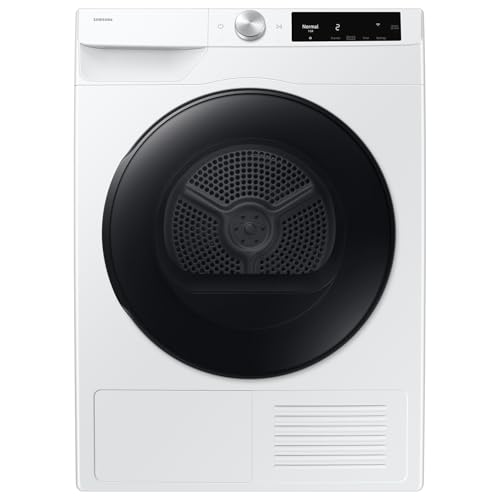
Samsung's 4.0 cu. ft. compact heat-pump dryer is the connected option here: an AI Smart Dial that reshuffles itself around your habits, SmartThings Wi-Fi for end-of-cycle alerts and remote start, and Sensor Dry to stop the cycle when the load is ready. It is ENERGY STAR certified and weighs 110 pounds. Samsung publishes weight but not cabinet dimensions for this model, so confirm the footprint with the seller before you commit a 24-inch opening.
What stands out
- AI Smart Dial keeps the cycles you use within one turn
- SmartThings app handles alerts, remote start and delay
- ENERGY STAR certified, with sensor-based dryness control built in
Watch out for
- Cabinet dimensions are missing from the published product listing
- Four cubic feet is the smallest drum in this group
Midea Heat Pump Ventless Front Load Dryer Stackable 4.4 Cu.ft White

Midea's 24-inch heat-pump dryer holds 4.4 cu. ft., matching the largest drum in this group. It needs a 240-volt circuit and the power cord is sold separately, which is the first extra cost to plan for. A humidity sensor ends the cycle at the dryness you choose, and Wrinkle Care adds up to 90 minutes of unheated tumbling. Dimensions are published: 23.4 inches wide, 25.7 inches deep, 33.5 inches tall.
What stands out
- Published 23.4-inch width suits a true 24-inch closet
- Humidity sensor adjusts cycle time instead of guessing at it
- ENERGY STAR qualified with a 90-minute wrinkle-care cycle
Watch out for
- Power cord is not included and has to be bought separately
- Wrinkle Care can add 90 minutes of unheated tumbling
Summit 3.88 cu.ft. Heat Pump Dryer, ENERGY STAR Certified, 208-240V, Slim 24” Width, White

Summit's SLD242W measures 23.63 inches wide and 25.75 inches deep, with a 3.88 cu. ft. stainless drum rated for 17.6 pounds of fabric. Fourteen settings run from extra dry through iron dry, plus delicates, wool, air fluff, half load and anti-crease. The ECOEYE readout shows power use while the cycle runs, and a delay start sets it for morning. A three-prong cord comes pre-installed for 208-240V, 15-amp service; the pull-out tank wants emptying about every two cycles.
What stands out
- Pre-installed three-prong cord can save an electrician visit
- Fourteen programs, including half load and anti-crease options
- ECOEYE display shows power use as the cycle runs
Watch out for
- Smallest drum in this group at 3.88 cubic feet
- Condensate tank needs emptying roughly every two cycles
BLACK+DECKER 4.4 Cu. Ft. Electric Dryer with Heat Pump, 22 lb. Capacity , 240V Electric Clothes Dryer with 16

Black+Decker's 4.4 cu. ft. heat-pump dryer carries a 22-pound fabric rating, 16 cycles and a zinc-coated stainless drum. The maker claims it uses 28 percent less electricity than a standard dryer because the air is recirculated and cooled. A water tank is included, and so is a 51-inch drain hose if you would rather plumb it. Installation is the catch: the unit requires professional hardwiring with a three- or four-wire UL-listed strain relief cord that is not in the box.
What stands out
- Includes a 51-inch drain hose for permanent plumbing
- A 22-pound fabric rating and 16 drying cycles
- Zinc-coated stainless steel drum resists rust and corrosion
Watch out for
- Requires professional hardwiring, and the cord is not included
- Heaviest machine in this group at about 121 pounds
Techomey 4.4 Cu.Ft Ventless Heat Pump Clothes Dryer, 24" Compact 120/240V Electric Front Load Drying Machine,

Techomey's 4.4 cu. ft. ventless heat pump arrives with a four-prong power cable, so a standard four-wire dryer outlet works without a trip to the hardware store. Sixteen cycles run through sensor drying that pauses when the load reaches the set dryness, and the maker says drum air stays below 50 degrees Celsius, which is gentle on wool and synthetics. The listing asks you to empty the tank after every load; if you forget, the program pauses until you do.
What stands out
- Four-prong power cord is included in the box
- Drum air held below 50 degrees protects delicate fabrics
- Offers 16 drying cycles with automatic sensor control
Watch out for
- Tank must be emptied after every single load
- A three-prong outlet needs a separate conversion adapter
Smad 23.4" Ventless Heat Pump Dryer, 4.4 Cu.Ft Front Load Clothes Dryer with Wrinkle Care,10KG Load, 120/240V,

Smad's 4.4 cu. ft. heat-pump dryer fits a 23.4-inch width and adds wrinkle care and a sanitize cycle to a set of 16 programs. The LED display shows the cycle and remaining time, and the cabinet is stackable on a matching washer. It is listed as 120/240V, which is worth clarifying before you buy, because the listing never says which configuration ships. Dimension fields also disagree between the bullets and the spec block, so measure the opening and ask for a cut sheet.
What stands out
- Sanitize and wrinkle-care cycles go beyond the basics
- 4.4 cubic feet fits in a 23.4-inch-wide cabinet
- LED display with clear cycle and status lights
Watch out for
- 120/240V listing never says which version actually ships
- Published dimensions conflict between two sections of the listing
Buying guide
Depth Is the Number That Fails
Catalog pages lead with capacity, but the number that decides a tiny-home install is depth. Cabinets in this group run roughly 22 to 26 inches front to back, and that four-inch spread is the difference between a closet door that shuts and one that stays open permanently. Behind the cabinet you still need room for the plug, the cord's bend radius and, if you plumb it, a drain hose. Two inches is a sensible allowance. One inch is wishful thinking. A header above the opening is the other hidden constraint: a 33-inch cabinet will not pass under a 30-inch soffit however wide the closet is.
Measure from the back wall to the face of the door frame, then measure again at the height of the machine, because baseboard heat, a shelf and a sloped ceiling all narrow a closet that looked generous at floor level. Then walk the delivery route. A 30-inch door with the hinges on will usually pass a 24-inch cabinet on a hand truck; a tight stair landing with a railing is where the move stops. Samsung publishes the shipping weight of its 4.0 cu. ft. model, 110 pounds, but not its cabinet dimensions, an odd omission for a machine sold into closets. Ask the seller for a cut sheet in writing, and keep the reply.
Stacking Rules That Get Ignored
Stacking is the standard tiny-home answer, and it only works over a front-load washer with a flat, load-bearing top. A top-loader cannot carry a dryer no matter how solid the lid feels. Use the kit the dryer maker sells for that washer, not a generic shelf, and anchor the pair with the anti-tip strap in the instructions. Heights add up: each cabinet here is about 33 to 34 inches tall, so a stack lands near 67 inches before the kit, which is fine under an eight-foot ceiling and tight under a loft. Measure the ceiling at the stack, not the room average, because a sloped roof can take six inches off the clearance you assumed.
Side-by-side suits a room that is wider than it is tall, and it makes service easier because you can reach the back panel without unstacking anything. Under-counter placement saves the most space and forgives the least. A standard counter is 36 inches high, which leaves two or three inches over a 33.5-inch cabinet, and the counter's overhang can stop the door opening past 90 degrees. Heat pumps shed a little warmth and need air movement, so do not seal one behind a solid cabinet door with no louver. Leave the clearance the manual specifies, usually an inch or two on each side and behind, and sketch the layout at real dimensions.
Where the Water Actually Goes
A ventless heat pump produces liquid water, and the machine has to put it somewhere. Either it collects in a pull-out tank you empty by hand, or it runs down a hose to a standpipe, laundry sink or floor drain. The tank is the rental answer, since it touches no plumbing. The drain is the household answer, because you stop thinking about the machine between loads. Output depends on how well the washer spun: a few cups for a light load, more than a quart for towels. Tank capacity varies more than the brochures suggest. Summit says empty it about every two cycles, Techomey says after every load, and the program pauses if you forget.
Black+Decker includes a 51-inch drain hose with its 4.4 cu. ft. model, the simplest path to permanent drainage in this group. If you go that route, check the slope. A hose that climbs or loops will hold water and smell like a wet basement within a month. Route it so it cannot be kicked out of the standpipe, and leave an air gap rather than sealing it into the drain. In a cabin that freezes, the tank is safer than a drain you cannot winterize, but a full tank lifted off the top of a stack is heavier than it looks. Empty it into a sink, rinse it and leave it open to dry.
The 240-Volt Conversation
Compact does not mean low voltage. Midea's dryer needs a 240-volt circuit and the power cord is sold separately. Summit ships with a three-prong cord pre-installed for 208-240V, 15-amp service. Techomey includes a four-prong cable but notes that a three-prong outlet needs a conversion adapter. Black+Decker goes the other way and requires professional hardwiring with a UL-listed three- or four-wire strain relief cord that is not in the box. Read that sentence twice before you plan a Saturday install, and check the receptacle: a modern four-wire dryer outlet will not accept an older three-prong plug without an adapter.
Tiny homes often run on a 30-amp service or a small subpanel, so have an electrician do the load calculation rather than guessing. A dryer sharing a circuit with an electric water heater is a tripped breaker waiting for a cold morning. Ask for a dedicated 30-amp circuit if the panel has room, and check the service rating against an induction cooktop or a heat-pump water heater. If the building only offers a 120-volt laundry outlet, this category is not for you; an adapter changes the shape of the plug, not the voltage, and a compressor that wants 240 volts will not start on half of that.
What Four Cubic Feet Will Dry
A 4.0 to 4.4 cu. ft. drum takes a normal mixed load: two pairs of jeans, a few shirts, socks and underwear with room to tumble. It does not take a king comforter, and it struggles with a full set of towels plus bath mats. A queen comforter is borderline and usually needs two passes with the item turned. Fabric-weight ratings need context too. Black+Decker's 22-pound figure and Summit's 17.6-pound figure describe what the drum can carry, not what will dry evenly in one pass. Load by volume, not by the scale, and keep a folding rack for anything that should not tumble.
Cycle times run long. Expect 70 to 90 minutes for cottons and up to two hours for heavy towels, because a small drum holds less air and the heat pump works at a gentler temperature. Sensor drying helps by stopping the moment the load is done, but a packed drum defeats the sensor: the outside dries while the middle stays damp, and the machine keeps running. Clean the lint filter before every load, since a matted filter cuts airflow and adds twenty minutes. Shake items out, dry heavy things first, and start a load before dinner so the machine is not still turning at bedtime.
Frequently asked questions
Do heat-pump dryers need to vent outside?
No. The loop is sealed: moisture condenses into a tank or drains away, and the same air recirculates through the drum. You still need clearance around the cabinet for intake air and a little space behind it for the cord and hose, but no duct and no exterior wall. That is the whole reason these machines suit tiny homes, basements and closets.
Will a heat-pump dryer work in an unheated cabin or loft?
It will run, but slower. A heat pump moves existing heat rather than generating it, so a cold room gives the compressor less to work with and cycles stretch out. Check the manual for the ambient range the maker supports, keep the machine above freezing, and expect longer runs in winter. A small space heater in the laundry area helps more than a faster cycle setting.
How much clearance does one need behind the cabinet?
Plan on about two inches, plus whatever the plug and hose need; a right-angle cord helps. If the machine drains into a standpipe, the hose needs a gentle downward slope, not a loop that traps water. Measure from the back wall to the door frame at the machine's height, since trim and baseboard heat eat space you counted at floor level.
Can I run one on a normal 120-volt outlet?
Not the models here, apart from the Smad and Techomey listings, which mention 120/240V without saying which version ships. The rest want 208-240 volts. A plug adapter does not change voltage, and a 120-volt circuit cannot feed a 240-volt compressor. Confirm the nameplate and the breaker size in writing before delivery day.
How long does a load take in a compact heat-pump dryer?
Expect 70 to 90 minutes for cottons in a four-cubic-foot drum and longer for towels or heavy denim. Sensor drying trims time on small loads but cannot beat the physics of low-temperature drying. One load a day is realistic for two or three people; three loads in a Saturday will fill the afternoon.
Verdict
The Midea is the top pick for a tiny home. It has the largest drum here at 4.4 cu. ft., a published 23.4-inch width that fits a real 24-inch closet, a humidity sensor that ends the cycle on dryness instead of a timer, and ENERGY STAR qualification. Budget for the power cord, which is not included.
Techomey is the value pick when the laundry already has a four-prong outlet, since the cable comes in the box and the sensor drying is comparable. Step up to the Samsung if you want the AI dial and phone alerts, and accept that you will have to chase the cabinet dimensions from the seller. Choose the Summit only if a pull-out tank and 14 programs matter more than the extra half cubic foot.