The most expensive setting on a heat-pump dryer is the one that keeps running after the clothes are already dry. Because the drum runs cool, an extra twenty minutes is not a minor waste the way it is on a vented machine; it is a measurable slice of every cycle, repeated several times a week. That is the case for a moisture sensor, and it is why the feature matters more here than it does on a dryer with a hot element and a short cycle.
A sensor does one job: decide when the load has reached the dryness you asked for, then stop. It does not make the machine faster, and it cannot fix an overloaded drum or a balled-up duvet cover. What it can do is take the guesswork out of setting a timer, which is a surprisingly large part of drying well. Owners who switch from timed drying to sensor drying usually report fewer overdried towels and fewer damp collars, in roughly that order.
We compared specifications, features and owner reports for six ventless heat pumps. Three name a moisture-sensing system outright, one describes dryness targets without naming a sensor, and two describe cycle counts without claiming sensing at all. That spread is the useful finding: in this category the presence of a sensor is a real differentiator, not a checkbox every machine shares.
Top picks at a glance
Samsung 4.0 cu. ft. Compact Ventless Heat Pump Dryer with AI Smart Dial, Wi-Fi
Check price on AmazonMidea Heat Pump Ventless Front Load Dryer Stackable 4.4 Cu.ft White
Check price on AmazonBLACK+DECKER 4.4 Cu. Ft. Electric Dryer with Heat Pump, 22 lb. Capacity , 240V
Check price on AmazonCompare the shortlist
| Model | Type | Capacity | Key feature | Amazon |
|---|---|---|---|---|
| 1. Samsung 4.0 cu. ft. Compact Ventless Heat Pump Dryer with AI Sma | Heat pump | 4.0 cu ft | Sensor drying | Check price |
| 2. Midea Heat Pump Ventless Front Load Dryer Stackable 4.4 Cu.ft Wh | Heat pump | 4.4 cu ft | Sensor drying | Check price |
| 3. BLACK+DECKER 4.4 Cu. Ft. Electric Dryer with Heat Pump, 22 lb. C | Heat pump | 4.4 cu ft | Ventless | Check price |
| 4. Techomey 4.4 Cu.Ft Ventless Heat Pump Clothes Dryer, 24" Compact | Heat pump | 4.4 cu ft | Sensor drying | Check price |
| 5. Smad 23.4" Ventless Heat Pump Dryer, 4.4 Cu.Ft Front Load Clothe | Heat pump | 4.4 cu ft | Sanitize cycle | Check price |
| 6. Summit 3.88 cu.ft. Heat Pump Dryer, ENERGY STAR Certified, 208-2 | Heat pump | 3.88 cu ft | Delay start | Check price |
Detailed reviews
Samsung 4.0 cu. ft. Compact Ventless Heat Pump Dryer with AI Smart Dial, Wi-Fi Connected, Smart Dry Technology
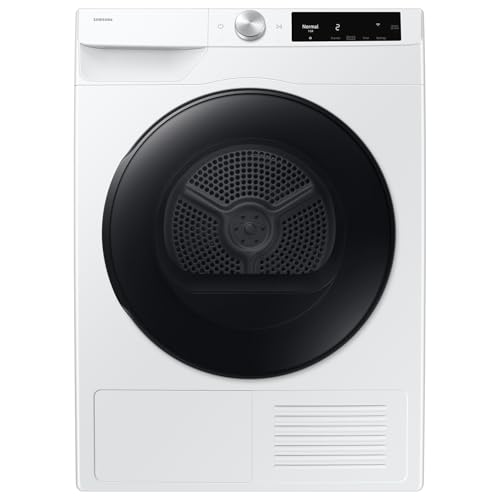
Samsung's 4.0 cu. ft. compact ventless heat pump has the most developed sensing package in this batch. Smart Dry adjusts time and temperature as the load dries, the AI Smart Dial learns which cycles you run and moves them forward, and SmartThings sends end-of-cycle alerts with remote start and delay. It is ENERGY STAR certified. The listing gives 110.2 pounds of weight but no cabinet dimensions, so measure your opening before ordering.
What stands out
- Smart Dry adjusts time and temperature throughout the cycle
- Phone alerts stop finished loads from sitting and creasing
- ENERGY STAR certified with a learning AI Smart Dial
Watch out for
- Cabinet dimensions are missing from the product listing
- At 4.0 cu. ft. the drum is tight for towels and bedding
Midea Heat Pump Ventless Front Load Dryer Stackable 4.4 Cu.ft White

Midea's 4.4 cu. ft. ventless heat pump uses a humidity sensor to match drying time to the level you select, which is the plainest useful version of the feature. Wrinkle Care adds about ninety minutes of unheated tumbling after the load is dry. It is ENERGY STAR qualified, stackable, and measures 23.4 inches wide, 25.7 deep and 33.5 tall. The 240-volt power cord is sold separately, so add it to the order.
What stands out
- Humidity sensor plus a selectable dryness level for each load
- Ninety minutes of unheated Wrinkle Care after drying
- ENERGY STAR qualified and stackable in a 24-inch slot
Watch out for
- Power cord is not included with the machine
- No steam or sanitize function appears in the listing
BLACK+DECKER 4.4 Cu. Ft. Electric Dryer with Heat Pump, 22 lb. Capacity , 240V Electric Clothes Dryer with 16

Black+Decker's BDFH44M is included here as the capacity alternative rather than the sensing choice. Sixteen cycles cover a wide range of fabrics, and the 4.4 cu. ft. drum is rated for 22 pounds. A water tank and 51-inch drain hose are both in the box, and the drum is zinc-coated stainless steel. The listing does not name a moisture sensor, so expect cycle-based drying. Professional hardwiring is required with a cord that is not supplied. Cabinet: 24.3 inches wide, 23.4 deep, 33.5 tall.
What stands out
- Twenty-two pound fabric rating, the highest in this group
- Drain hose included, so the dryer can run continuously
- Sixteen cycles and a zinc-coated stainless steel drum
Watch out for
- No moisture sensor named anywhere in the features
- Cord is not included and hardwiring is required
Techomey 4.4 Cu.Ft Ventless Heat Pump Clothes Dryer, 24" Compact 120/240V Electric Front Load Drying Machine,

Techomey's 4.4 cu. ft. ventless heat pump pairs a smart sensor with a low temperature ceiling. Sixteen cycles run with drum air held below 50 degrees Celsius, and the program pauses when the sensor judges the load has reached the ideal condition. The brand claims a 66.7 percent reduction in power use. The cabinet is listed at 25.6 inches wide, 23.5 deep and 33.5 tall. A four-prong cable is fitted, and the tank needs emptying after every load.
What stands out
- Sensor pauses the program at the ideal dryness
- Drum air held below 50 degrees Celsius throughout
- Stackable 4.4 cu. ft. cabinet for a tight closet
Watch out for
- Tank must be emptied after each load, without exception
- Four-prong cable needs an adapter on older outlets
Smad 23.4" Ventless Heat Pump Dryer, 4.4 Cu.Ft Front Load Clothes Dryer with Wrinkle Care,10KG Load, 120/240V,

Smad's 4.4 cu. ft. ventless heat pump offers sixteen programs, a sanitize function and wrinkle care, with an LED display and status lights. The feature list does not name a moisture sensor, so the sixteen programs are where the control comes from. The cabinet measures 23.4 inches wide, 25.7 deep and 33.5 tall, and it stacks on a matching washer. The listing describes 120/240V operation without stating which version ships, so confirm the voltage before buying.
What stands out
- Sixteen programs with sanitize and wrinkle care included
- Readable LED display with cycle status lights across the panel
- Stackable cabinet that measures 23.4 inches across the front
Watch out for
- No moisture sensor named in the product listing
- Voltage configuration is not specified by the seller
Summit 3.88 cu.ft. Heat Pump Dryer, ENERGY STAR Certified, 208-240V, Slim 24” Width, White

Summit's SLD242W uses dryness targets rather than a named sensor. Fourteen settings include extra dry, light dry and iron dry for cottons and permanent press, alongside delicates, wool, air fluff and a half load. A start and stop control lets you interrupt a cycle, and ECOEYE reports power use as it runs. The drum holds 3.88 cu. ft., rated for 17.6 pounds. A three-prong cord is pre-installed for 208-240V, 15-amp service, and the pull-out tank needs emptying about every two cycles.
What stands out
- Explicit extra dry, light and iron dry targets
- ECOEYE display reports power consumption during the cycle
- Three-prong cord comes pre-installed for the 208-240V service
Watch out for
- No moisture sensor described in the feature list
- 3.88 cu. ft. is the smallest drum here
Buying guide
How a Dryer Knows the Load Is Done
Most residential dryers use one of two methods. The first is a pair of metal bars inside the drum that pass a small current through the fabric; wet cloth conducts, dry cloth does not, and the machine stops when the reading crosses a threshold. The second is a humidity sensor in the air path, which measures how much moisture the exhaust or recirculating air is carrying. Both work, and both are only as good as the contact they get. Bars need the clothes to touch them. A humidity sensor needs the air to be representative of the whole load. Most owners never see the sensor at work; the evidence is a load that comes out right without anybody setting a timer.
That is why sensor performance depends on loading habits as much as on electronics. A drum packed tight will trap damp air in the middle, and the sensor will call the load dry while the center of a towel is still wet. Sheets that wrap themselves into a rope are the classic failure, because the outside dries and the inside stays damp for another hour. Shaking out each item and leaving air space does more for accuracy than any setting. The sensor is a referee, not a dryer. The practical test is simple. Dry the same load twice, once timed and once sensed, and compare how the clothes feel. The sensed load is usually slightly less crisp and noticeably less hot.
Why Over-Drying Costs More on a Heat Pump
On a vented dryer, extra minutes are wasteful but cheap, because the element is the main cost and the cycle is short. On a heat pump, the compressor runs for the whole cycle, and the cycle is already long. Twenty unnecessary minutes on a ninety-minute run is more than a fifth of the energy used, repeated every time you dry. Multiply that by five loads a week and the sensor stops being a convenience feature and becomes the thing that makes the efficiency claim hold up in practice. The compressor runs for most of the cycle either way, so the saving comes from a shorter finish rather than from a lower peak or a shorter heat-up. Still real, just quieter than the marketing suggests.
There is a fabric cost as well. Heat-pump drying is gentle partly because the temperature is low, but time still does damage: elastic relaxes, prints crack, and lint sheds from toweling that tumbles an hour longer than it needs to. Sensor drying shortens the exposure. The effect is subtle on any single load and obvious over a year of school uniforms and gym clothes. If you are buying a heat pump for gentle care, pairing it with a timer you set by guesswork undercuts the reason you chose the machine. A year of it shows in the lint tray and in how long towels stay thick. It shows in the bill too, though less than the gap between heat pump and vented.
Dryness Levels Are the Part You Actually Use
A sensor needs a target. Most machines offer three or four levels, described as extra dry, dry, less dry or iron dry, and the choice matters more than the sensor itself. Extra dry is for towels and bedding that go straight into a cupboard. Less dry leaves a little moisture for items you plan to iron, and iron dry stops earlier still so the iron has something to work with. Leaving the machine on extra dry for everything is how people end up with faded t-shirts and shrunken socks. The number of levels also varies. Three is common, four is generous, and two forces a choice between under-drying and over-drying. Read the manual before you buy rather than after the machine arrives.
The labeling is not standardized, so read the manual rather than assuming. Midea lets you pick a desired dry level and holds it with a humidity sensor. Summit offers extra dry, light dry and iron dry targets on cottons and permanent press, which is a level-based control rather than a named sensor. Samsung's Smart Dry adjusts both time and temperature as the load progresses. Techomey pauses the program when its sensor judges the load has reached the ideal condition. Each of those behaves a little differently in the real world, and the manual is the only reliable guide. Some manuals list a recommended setting for each fabric, and following it removes most of the guesswork. A machine with only a timer is asking you to do the thinking.
When the Sensor Gets It Wrong
Sensor faults are usually maintenance problems in disguise. Fabric softener leaves a film on the metal bars, and a coated bar reads wet fabric as dry or dry fabric as wet. Dryer sheets do the same thing over time. Wipe the bars with a soft cloth and a little rubbing alcohol when cycles start ending early, and stop using softener in the wash if you can. The other common cause is a lint-clogged filter, which restricts airflow and confuses a humidity sensor that is reading air rather than fabric. Hard water leaves mineral scale on the bars as well, one more reason to wipe them if your water is untreated. The film is invisible until a cycle ends damp for no obvious reason.
Mixed loads are the second cause, and no sensor can solve them. A load of heavy jeans and light t-shirts will finish with the shirts bone dry and the waistbands damp, because the sensor stops when the average is dry. Sort by weight rather than by color when you can. Small loads are the third: two items may not generate enough moisture in the air stream for a reliable reading, so the machine runs long or stops short. If you regularly dry tiny loads, a timed setting is the better tool. The fix is a habit rather than a machine: shake out each item, and accept that a mixed load needs a partial second run. Small loads also leave more air to heat, which wastes a little energy each time.
Matching the Control to the Household
Households that dry a mixed load every day benefit most from a sensor with selectable levels, because the machine is doing the thinking on a schedule nobody has time to manage. Households that dry delicates and wool should look for a low temperature ceiling as well as a sensor, since stopping early matters less than never getting hot in the first place. Renters with a tank rather than a drain should check that the machine resumes properly after the tank is emptied, because a pause mid-cycle can leave the sensor reading stale. Families with a newborn and a steady stream of small washes may find the sensor less useful than a timed cycle, because a half-full drum gives it little to read.
One feature worth having alongside the sensor is a wrinkle-care or anti-crease tumble that starts after the load is dry. It keeps clothes moving without adding heat, which matters if you cannot empty the drum the moment the buzzer sounds. Midea's ninety-minute unheated tumble is the clearest example here. It is not drying, and it does use a little power, but it prevents the creased heap that makes people reach for the iron. Between a good sensor and a patient tumble, most of the daily friction disappears. That combination beats a longer feature list. A dryer that stops at the right moment and keeps the load moving until you arrive removes two of the common reasons people overload a machine. That is the benefit, and it does not show up on a spec sheet.
Frequently asked questions
Is sensor dry worth paying more for on a heat pump?
Usually yes. Heat-pump cycles are long, so twenty wasted minutes is a large share of the energy a load consumes. A sensor also protects fabric from unnecessary tumbling. If the price difference is small, take the sensor. If you only ever dry full loads of similar fabric, a timed cycle with a good routine can come close.
Why does my dryer stop while the clothes are still damp?
The usual causes are an overloaded drum, a load of mixed fabric weights, or coated sensor bars. Fabric softener and dryer sheets leave a film that misreads moisture. Wipe the bars, clean the lint filter, and try a smaller load sorted by weight. If the machine has a dryness level setting, move it one step toward more dry.
Do all heat-pump dryers have moisture sensors?
No. In this group, Samsung, Midea and Techomey name sensing systems directly. Summit offers dryness targets rather than a named sensor, and Black+Decker and Smad describe cycle counts without claiming moisture sensing. Check the feature list rather than assuming every modern dryer senses the load.
What dryness level should I choose?
Cupboard dry for towels, bedding and everyday cotton. Less dry or iron dry for shirts you plan to press, because a little residual moisture helps the iron. Extra dry only for heavy items that will sit in a cupboard. Running everything on extra dry shortens fabric life and wastes the efficiency a heat pump is meant to deliver.
Can a sensor handle a king-size comforter?
Not reliably in a compact drum. A 4.0 to 4.4 cu. ft. cabinet cannot give a king comforter room to tumble, so the outside dries while the inside stays damp and the sensor reads the average. Most owners take bedding to a laundromat. For a queen duvet cover, dry it alone with a couple of dry towels to help it turn.
Verdict
The Samsung DV25FG62B0BEA2 is the best sensor-dry package here. Smart Dry adjusts time and temperature through the cycle, the AI dial keeps your usual programs close, and SmartThings alerts you when the load finishes so it does not sit and crease. It is ENERGY STAR certified. Confirm the cabinet dimensions with the seller, because Samsung publishes weight but not the measurements.
The Midea is the value pick: 4.4 cu. ft., a humidity sensor with selectable dry levels, and a ninety-minute unheated Wrinkle Care tumble. Choose the Techomey instead if wool and delicates dominate your laundry, since its sensor pairs with a stated 50 degrees Celsius ceiling. Summit suits anyone who wants explicit extra dry, light and iron dry targets.